
Hold Back Soil Without Constant Repairs
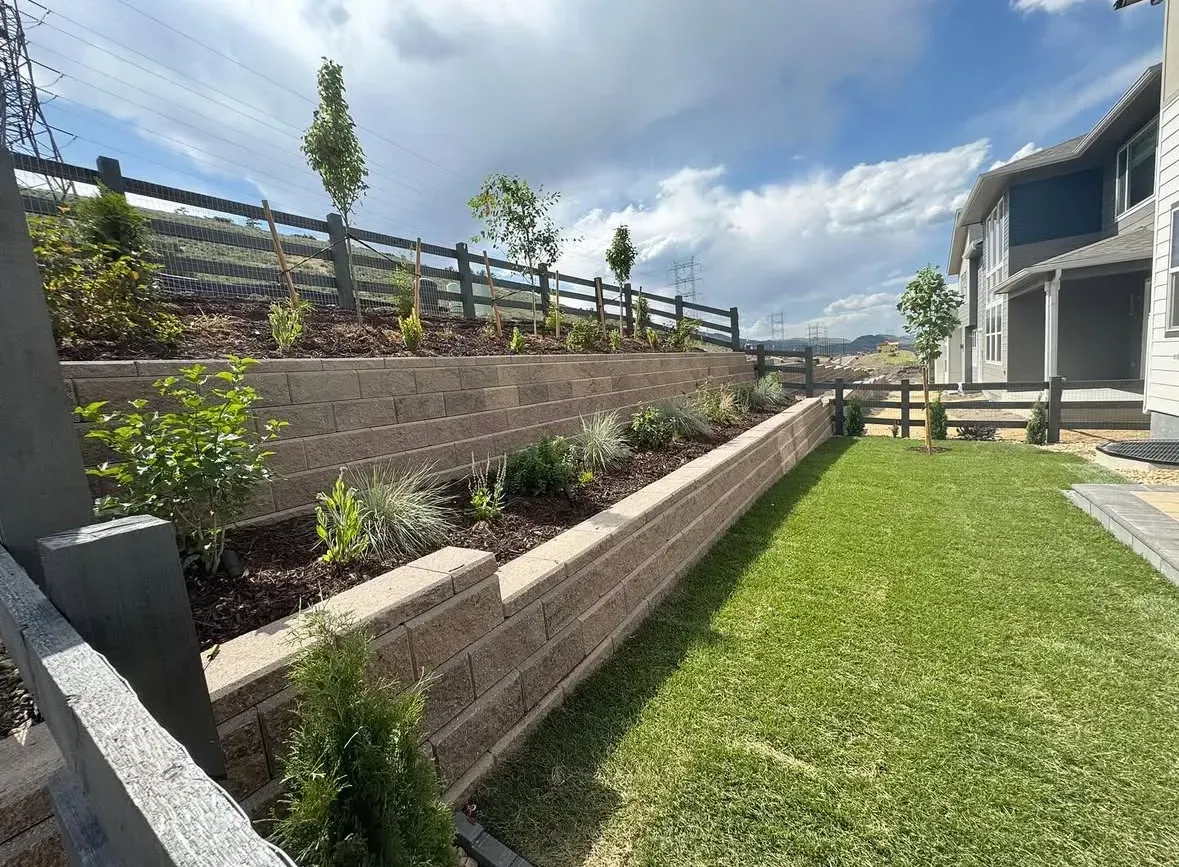
Retaining walls built to manage grade changes and prevent erosion
If your yard slopes enough to cause water runoff, soil movement, or unusable space, a retaining wall gives you flat ground where you need it and keeps the hillside from washing out every time it rains. The wall holds back the soil while allowing water to drain through or around it so pressure does not build up behind the structure and push it out of place over time.
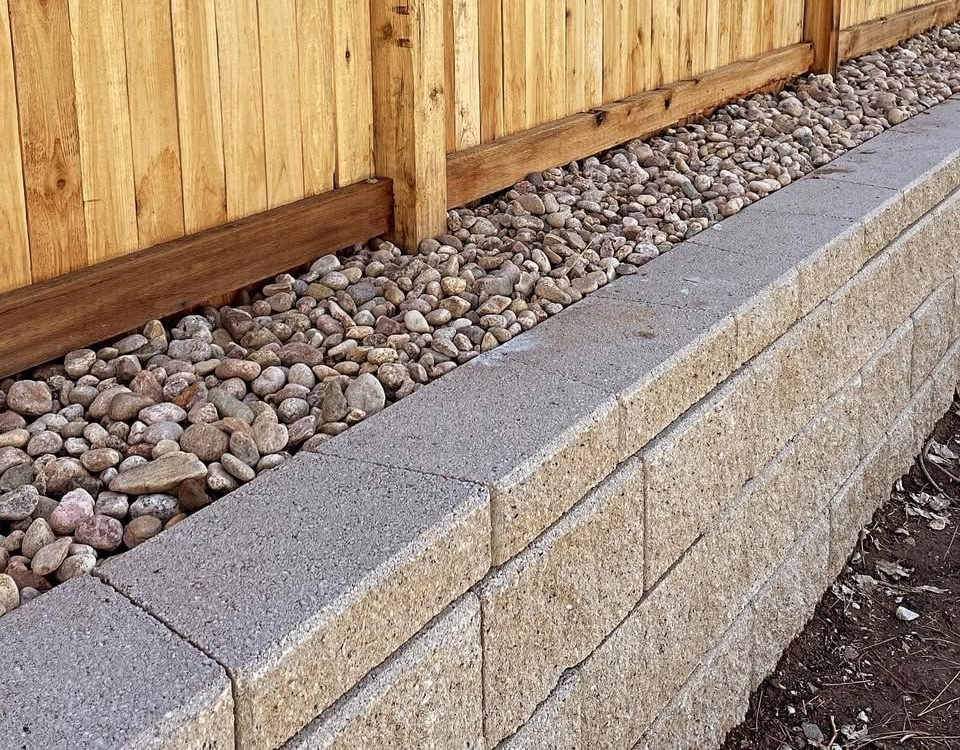
Valencia Landscape builds retaining walls using wood, concrete, or modular block depending on the height, load, and look you want. Each wall is built with a foundation that sits below the frost line, a backfill layer that promotes drainage, and a face that stays level even when the ground freezes and thaws. The result is a structure that does what it is supposed to without shifting, cracking, or needing constant adjustment.
If you need a retaining wall in Johnstown, Fort Collins or surrounding areas and want to talk through your options, reach out to Valencia Landscape to go over what works for your slope and soil type.
How a Retaining Wall Gets Built to Stay Put
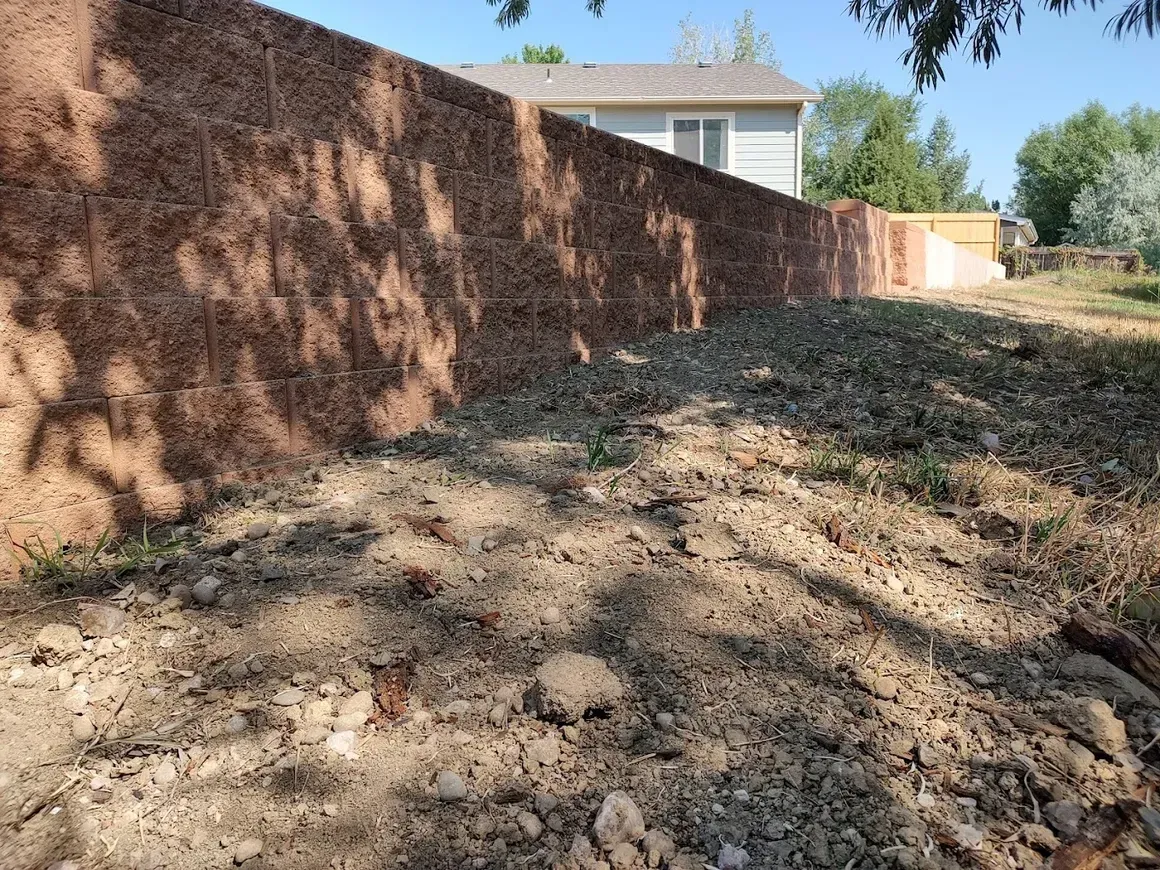
The crew starts by excavating the slope to create a level base, then lays a compacted gravel foundation that prevents settling and allows water to move away from the wall instead of pooling behind it. Each course of block, timber, or poured concrete is checked for level and alignment so the wall does not lean or bow as it rises.
After the wall is complete, you will see flat, usable space where there used to be a slope, no visible lean or gaps in the face, and drainage that keeps water from pooling at the base or saturating the soil behind the wall. The structure stays in place through freeze-thaw cycles and heavy rain without needing seasonal adjustments or emergency fixes.
Material choice depends on wall height and site conditions, but every install includes proper drainage, compacted backfill, and a footing that extends below frost depth. If your slope exceeds a certain height, the wall may need to be terraced in multiple tiers to manage the load safely and meet local codes.
Here is What People Usually Want to Know
Most questions about retaining walls come down to cost, materials, drainage, and how long the wall will last, so these answers cover the practical concerns that come up before the work starts.
What materials does Valencia Landscape use for retaining walls?
They build walls using pressure-treated wood, poured concrete, and modular concrete blocks, with the choice depending on wall height, soil conditions, and the look you want. Each material is selected to handle the specific load and drainage needs of your site.
How tall can a retaining wall be before it needs engineering?
Most walls under four feet can be built without a formal engineering plan, but taller walls or those holding back significant soil loads may require a stamped design to meet local building codes. The crew will let you know if your project crosses that threshold.
What keeps a retaining wall from tipping over or cracking?
A proper footing, compacted gravel backfill, and drainage pipe behind the wall prevent water pressure from building up and destabilizing the structure. The wall is also built with a slight backward lean so gravity works with it instead of against it.
How long does it take to build a retaining wall in Johnstown?
Most residential walls take between three and seven days depending on length, height, and site access. The timeline includes excavation, foundation prep, wall construction, and backfill compaction.
Why do some retaining walls fail after a few years?
Walls fail when drainage is ignored, footings are too shallow, or backfill is not compacted, allowing water to saturate the soil and push the wall forward. A properly built wall accounts for all three and lasts decades without major repairs.
If you have a slope that needs to be managed or a yard that could use more flat space, contact Valencia Landscape to talk through what kind of retaining wall makes sense for your property and how the install process works.